

High foamed PP profiles offer clear advantages, including lightweight structure, strong thermal insulation, chemical resistance, recyclability, and cost-effectiveness. These features support rising demand in automotive, construction, packaging, and consumer goods. Superior impact resistance and durability make them valuable for components like planetary gearbox housings and many other high-performance applications.
Key Takeaways
- High foamed polypropylene profiles are lightweight, making them easy to handle and transport. This feature helps reduce fuel consumption in automotive applications.
- These profiles provide excellent thermal insulation, keeping interiors comfortable and reducing energy costs in buildings and packaging.
- Foamed polypropylene is highly durable and resistant to chemicals, ensuring long service life and low maintenance needs in harsh environments.
What Is Physically Foamed Polypropylene?
Definition and Structure
Physically foamed polypropylene is a type of polypropylene foam made by expanding the polymer with a foaming agent. This process changes the molecular arrangement of the material, creating a closed-cell structure filled with tiny gas bubbles. The result is a lightweight material with unique properties. Unlike standard polypropylene, which is solid and dense, physically foamed polypropylene contains many small, enclosed cells that reduce weight and improve insulation. The use of a physical blowing agent, such as carbon dioxide, helps form these cells during production. This structure gives physically foamed polypropylene its advanced microporous foaming technology, making it suitable for many applications that require both strength and low weight.
The main steps in producing foamed PP include reactive foaming, soluble foaming, pressure quench foaming, and improved compression molding. Each method uses either a chemical or physical blowing agent to create the foam. For example, pressure quench foaming uses CO2 to produce a closed-cell structure, while improved compression molding uses azodicarbonamide to control density and cell size.
Key Properties of Polypropylene Foam
Polypropylene foam stands out for its mechanical and thermal properties. The closed-cell structure provides good shape stability and excellent thermal insulation. As the amount of blowing agent increases, the foam becomes lighter and its thermal conductivity decreases, which means it keeps heat in or out more effectively. However, larger gas cells can lower the hardness and mechanical strength, but the material still offers strong impact resistance. Polypropylene foam also resists chemicals and moisture, making it durable in harsh environments. These features make physically foamed polypropylene a top choice among physically foamed polymers. It is also used in products like microporous foamed polypropylene sheet, where both lightness and insulation are important.
Main Advantages of High Foamed PP Profiles
Lightweight and Easy Handling
Foamed pp profiles stand out for their lightweighting. The closed-cell structure of physically foamed polypropylene reduces density while maintaining strength. This makes handling and transportation much easier. Workers can lift and move large panels or components with less effort. In automotive and construction, lightweighting helps lower fuel consumption and makes installation faster. The lightweight and high strength of polypropylene foam also means less material is needed for the same performance. This leads to a cost-effective use of pp in many industries.
Superior Thermal Insulation
Thermal insulation is a key property of foamed pp. The closed-cell structure traps air, which slows down heat transfer. Polypropylene foam provides excellent thermal insulation performance in both hot and cold environments. This helps keep interiors comfortable and reduces energy costs. In building materials, thermal insulation performance means walls and roofs stay cooler in summer and warmer in winter. In packaging, thermal insulation protects temperature-sensitive goods during shipping. Physically foamed polypropylene also offers sound insulation, which reduces noise transmission in homes and vehicles. The combination of thermal insulation and sound insulation makes these profiles ideal for many applications.
Chemical Resistance and Durability
Foamed pp profiles show strong resistance to many chemicals. This makes them suitable for harsh industrial environments. The table below shows how physically foamed polypropylene retains its strength after exposure to common chemicals:
| Chemical | Tensile Strength Retention | Impact Strength Retention |
|---|---|---|
| Distilled Water | ~100% | ~100% |
| 30% Hydrogen Peroxide | ~100% | ~100% |
| Ethanol (99.5%) | ≥97% | ≥97% |
| 8% Acetic Acid | ≥97% | ≥97% |
| 37% Hydrochloric Acid | ≥97% | ≥97% |
| IPA (75% and 99%) | ≥95% | ≥95% |
| Acetone | ~93-94% | ~93-94% |
Polypropylene foam keeps its mechanical properties even after chemical exposure. This durability means longer service life and less maintenance. High temperature stability adds another layer of protection, allowing these profiles to perform well in demanding conditions.
Rigidity, Toughness, and Impact Resistance
Physically foamed polypropylene offers a unique combination of rigidity and toughness. This means the material resists bending and breaking under stress. The excellent physical and mechanical characteristics of foamed pp make it suitable for parts that must absorb shocks or impacts. The following table shows how polypropylene foam performs in impact tests:
| Test Speed (mm/s) | Nominal Strain Rate (1/s) | Elastic Modulus (MPa) | Peak Stress (MPa) | Nominal Strain at Break (%) |
|---|---|---|---|---|
| 0.1 | 0.01 | 1660 | 20.4 | >130 |
| 10 | 1 | 1790 | 24.9 | 46 |
| 100 | 10 | 2030 | 28.3 | 38 |
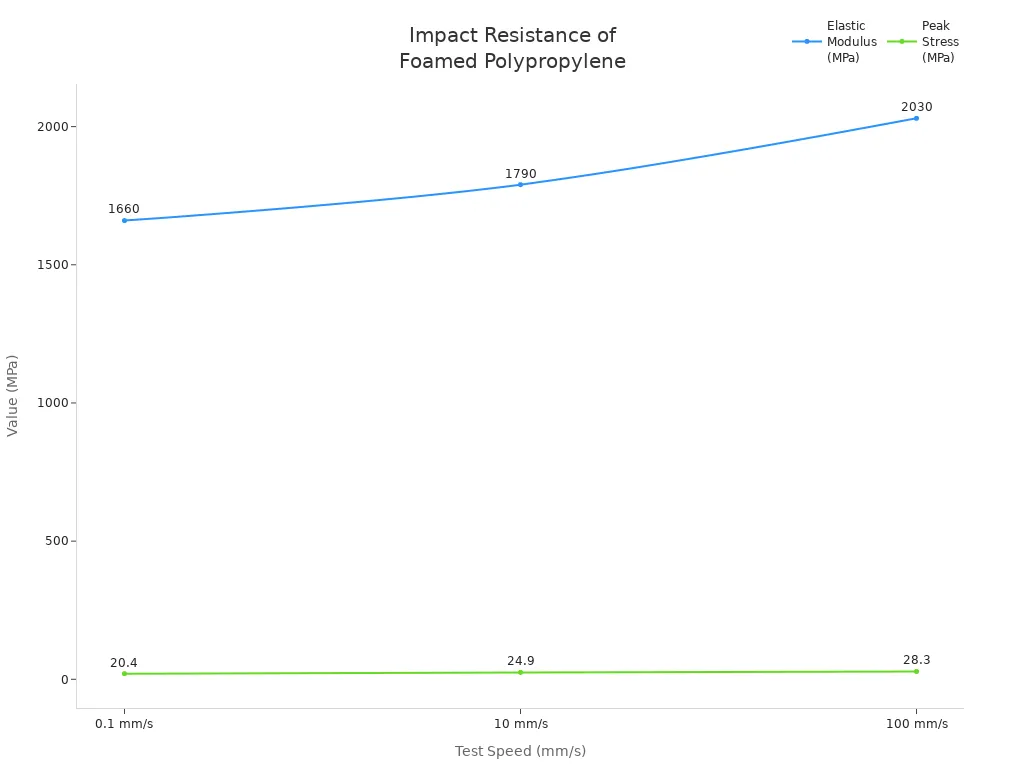
The combination of rigidity and toughness ensures that foamed pp profiles can withstand impacts in automotive, packaging, and construction uses. High temperature stability also means the material keeps its shape and strength in hot environments. Sound insulation adds another benefit, as the structure helps dampen vibrations and noise.
Recyclability and Sustainability
Polypropylene foam is recyclable. This supports sustainability goals in many industries. The production of physically foamed polypropylene uses less raw material, which reduces waste. Many profiles meet international standards for safety and environmental protection. The table below lists some common certifications:
| Certification/Standard | Description |
|---|---|
| ISO 9001:2015 Certification | A standard that specifies requirements for a quality management system. |
| UL Product Certification | Ensures products meet safety and performance standards. |
| NSF/ANSI/CAN-61 Product Certification | Confirms safety for products in contact with drinking water, ensuring they meet health effects standards. |
| Regulatory Letters | Documentation that outlines compliance with regulations. |
| Safety Data Sheets (SDS) | Provides information on the properties of a particular substance. |
| Customer Survey | Feedback mechanism to ensure customer satisfaction and compliance with needs. |
Using foamed pp helps companies meet environmental regulations and customer expectations. The sound insulation and thermal insulation performance of these profiles also contribute to energy savings and a smaller carbon footprint.
Cost-Effectiveness
Cost-effective use of pp is a major reason for its popularity. Polypropylene foam requires less material and energy during production. Lightweighting reduces shipping costs and makes installation faster. The long service life and low maintenance needs lower total costs over time. The combination of rigidity and toughness means fewer replacements and repairs. Sound insulation and thermal insulation performance add value in buildings and vehicles by reducing energy bills. Choosing foamed pp profiles is a smart way to balance performance, sustainability, and budget.
Industry Applications of Polypropylene Foam
Automotive and Planetary Gearbox Uses
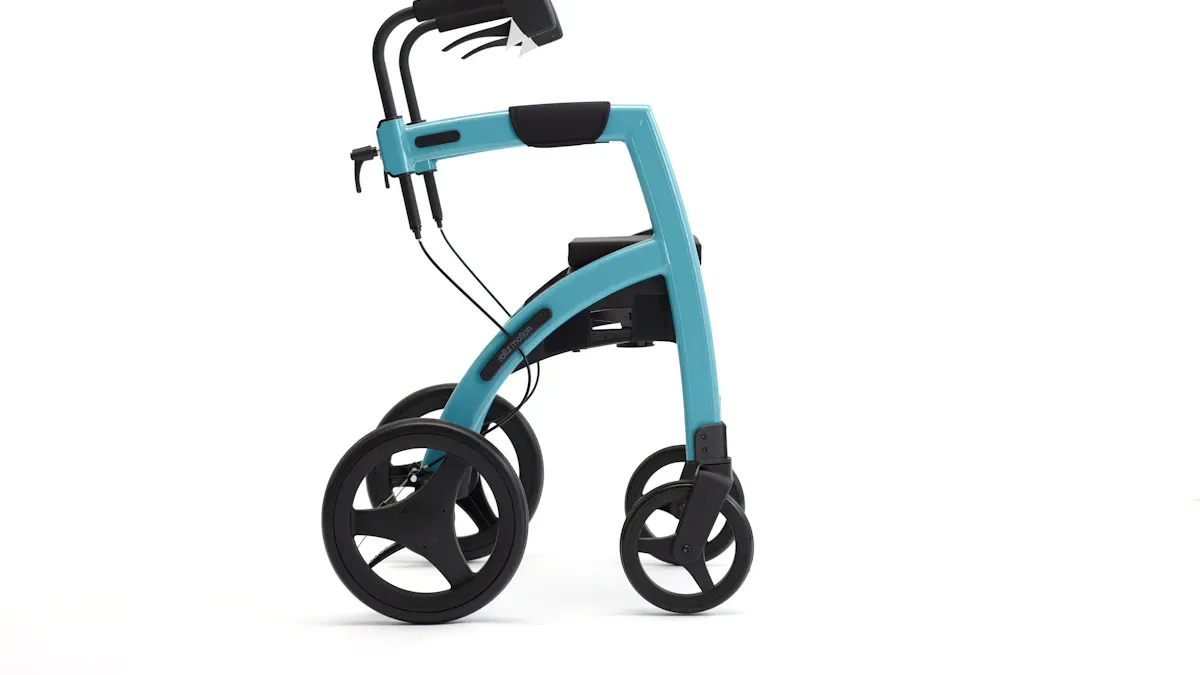
Polypropylene foam is widely used in the automotive industry. Its lightweight nature helps reduce vehicle weight, which improves fuel efficiency. Many car parts, such as door panels, trunk liners, and seat cores, use polypropylene foam for its strength and durability. In planetary gearbox systems, this material provides excellent vibration damping and noise reduction. The closed-cell structure of polypropylene foam protects sensitive components inside the planetary gearbox. This leads to longer service life and less maintenance. The use of polypropylene foam in planetary gearbox housings also helps lower production costs and makes assembly easier. Many manufacturers choose polypropylene foam for both automotive and packaging needs because it offers a balance of strength and weight.
Construction and Building Materials
Polypropylene foam plays a key role in modern construction. Builders use it for insulation panels, wall cladding, and roofing materials. Its low thermal conductivity helps keep buildings warm in winter and cool in summer. This reduces the need for heating and cooling, which saves energy. The lightweight property of polypropylene foam means less structural support is needed.
- Used in building insulation to enhance energy efficiency
- Provides a barrier against heat transfer
- Reduces energy consumption for heating and cooling
- Lowers structural weight, minimizing foundational support
Packaging and Protective Solutions
Polypropylene foam is a top choice for automotive and packaging applications. It protects products during shipping and storage. The material absorbs shocks and resists chemicals, keeping goods safe. Many companies use polypropylene foam for food trays, electronics packaging, and medical supplies. Regulatory standards shape the use of polypropylene foam in packaging.
| Region | Regulation/Initiative | Implications for Polypropylene Packaging |
|---|---|---|
| European Union | Single-Use Plastics Directive (2019) | Sets recycling targets and mandates recycled content in certain products. |
| United States | California legislation (by 2032) | Requires all plastic packaging to be recyclable, reusable, or compostable. |
| Asia | China’s ban on importing plastic waste | Focus on domestic recycling capabilities for polypropylene packaging. |
| International | Basel Convention’s Plastic Waste Amendments | Regulates global trade in plastic waste, affecting recycled supply chains. |
Consumer Goods
Polypropylene foam appears in many consumer goods. It is found in sports equipment, reusable containers, and toys. The material is safe, lightweight, and easy to clean. Its durability and recyclability make it a smart choice for products used every day. The same qualities that benefit automotive and packaging also improve consumer goods.
Considerations and Limitations
Performance Boundaries
High foamed polypropylene profiles show impressive properties, but understanding their performance boundaries is important for reliable use. The ability to foam depends on melt strength and the ratio of strain hardening. The highest expansion ratio appears at elevated temperatures, but foamability improves at lower temperatures when using certain foaming methods. The table below summarizes key performance aspects:
| Performance Aspect | Description |
|---|---|
| Foamability | Improved by high melt strength and strain hardening ratio, with the highest expansion ratio at high temperatures. |
| Temperature Effects | Foamability is enhanced at lower temperatures (<150 °C) using specific foaming methods. |
| Cellular Structure | Some methods create a more uniform cellular structure over a wide temperature range (120–170 °C). |
Pore density increases from the core to the border of the profile. The average pore diameter is about 131 micrometers, with a density of 6.3×10^4 cells per cubic centimeter in the ideal foamed zone. Temperature gradients can affect pore size and density, which sets boundaries for thermal properties. High foamed polypropylene profiles maintain dimensional stability across a wide temperature range. This is crucial for automotive interiors and other demanding uses. The foam absorbs less than 1% moisture after 24 hours of immersion, which helps preserve thermal insulation in humid conditions. These features support long-term performance in many environments.
Application-Specific Factors
Selecting the right high foamed polypropylene profile depends on the needs of each application. The use of long chain branched polypropylene (LCBPP) can improve dynamic shear and extensional properties. Supercritical carbon dioxide reduces melt viscosity and increases the density of long chain branches, which leads to better mechanical strength. The table below highlights important factors:
| Factor | Description |
|---|---|
| Long Chain Branched Polypropylene (LCBPP) | Shows excellent dynamic modulus and higher low-frequency complex viscosity. |
| Supercritical Carbon Dioxide (scCO2) | Lowers melt viscosity, enhances diffusion, and increases LCB density for improved properties. |
| Mechanical Properties | LCB polyolefins have higher tensile strength, modulus, and impact strength. |
Environmental conditions also play a role. The foam resists moisture and maintains shape in humid climates. Polypropylene carbonate foam can break down into non-toxic byproducts in composting conditions, supporting closed-cycle production and sustainability goals. The rate of biodegradation depends on the environment, with complete breakdown possible in 6–12 months under optimal composting.
High foamed PP profiles deliver many advantages:
- Excellent compression properties
- Strong chemical, water, and moisture resistance
- Lightweight and buoyant
- Versatility for many uses
These profiles drive sustainability initiatives by improving recyclability and reducing material use. Their environmentally friendly nature supports future sustainability initiatives in packaging and industrial design.
FAQ
What makes high foamed PP profiles different from regular plastic profiles?
High foamed PP profiles have a closed-cell structure. This makes them lighter and better at insulating than regular solid plastic profiles.
Can high foamed PP profiles be recycled?
Yes! ♻️ Polypropylene foam is recyclable. Many recycling programs accept it, which helps reduce waste and supports sustainability goals.
Where are high foamed PP profiles most commonly used?
- Automotive parts
- Building insulation
- Packaging materials
These profiles work well in areas that need lightweight, strong, and durable materials.
Post time: Apr-23-2026